The Conference Forum
Biotech Research Organisation · Boston, MA
An outdated multi-domain website across 9 biotech conference brands failed to convert visitors into event registrants, with poor mobile usability and no consistent navigation pattern across domains.
Design and ship a modular, responsive system that unified 9 conference domains under a single design language while preserving each domain's individual identity — from homepage to agenda to multimedia.
Event registration conversion, mobile session engagement, cross-domain navigation completion, and reduction in bounce rate — measured post-launch across all 9 domains.
One design system. Nine conference brands. One shipped platform.
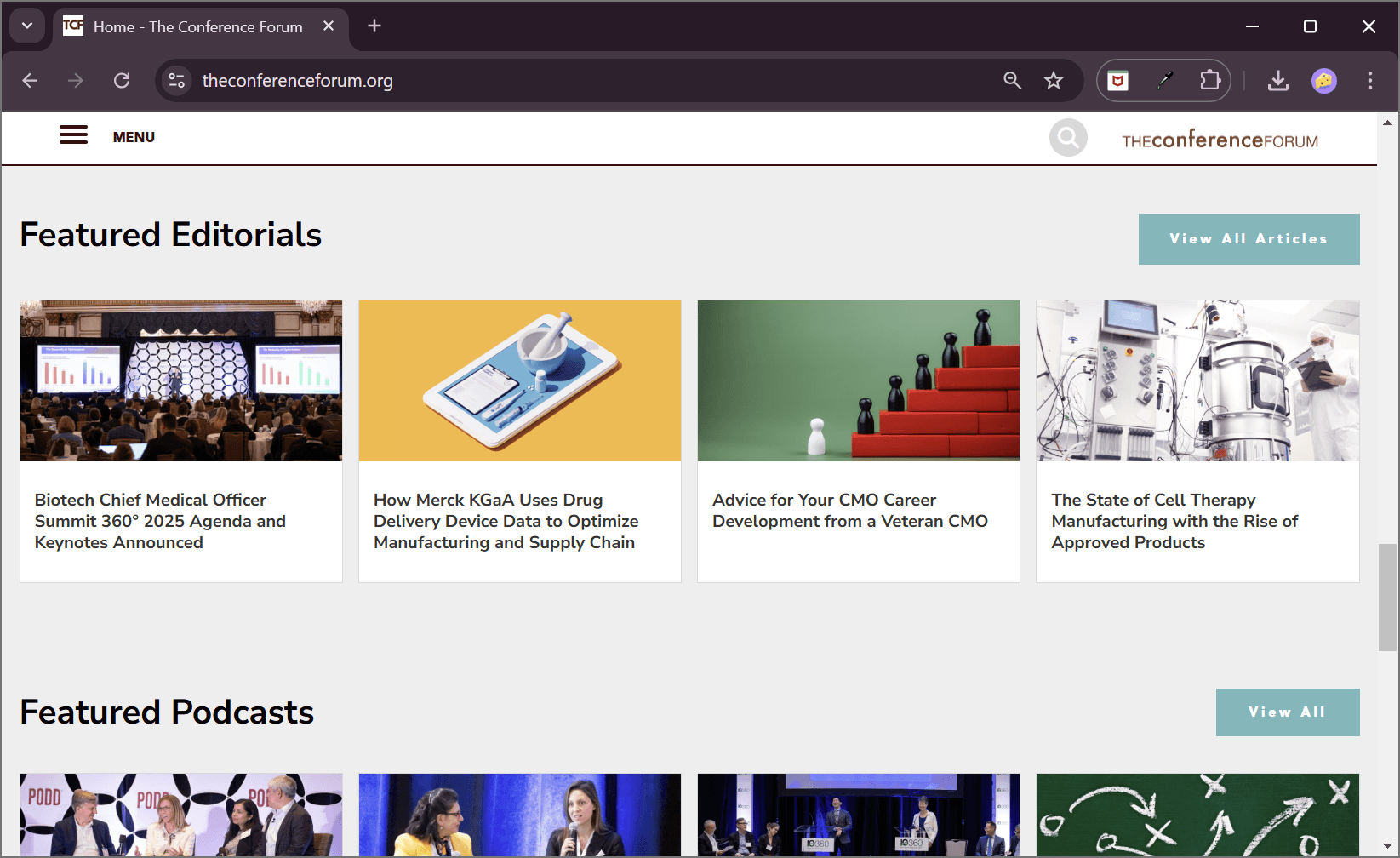
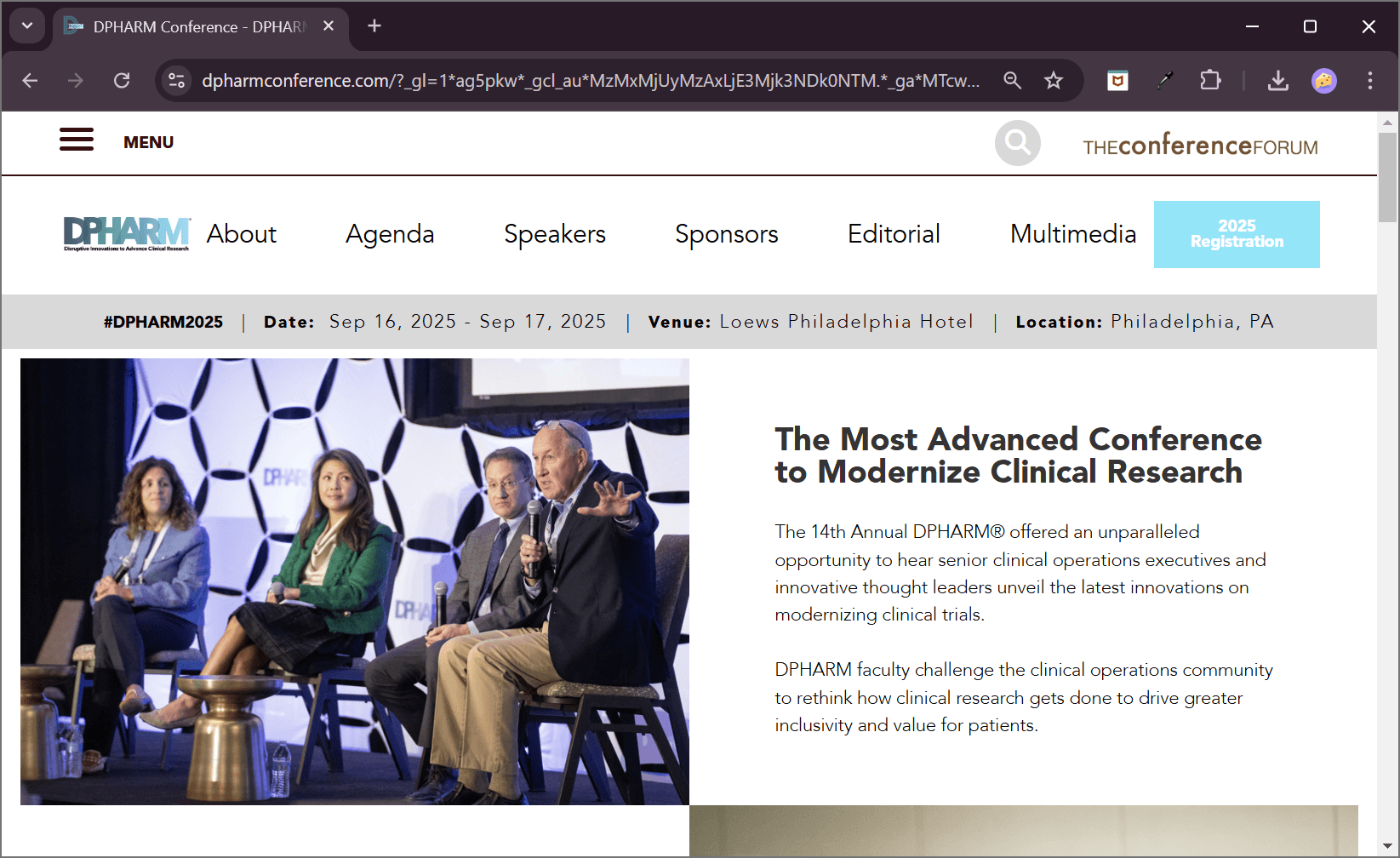
The Conference Forum is a Boston-based biotech research organisation running nine distinct annual conferences across specialisms including immuno-oncology, drug delivery, clinical trials, and biotech leadership. The redesign brief was ambitious: create a unified web presence that gave each of the nine domains its own identity while connecting them through a single, cohesive design system and navigation architecture.
Main Conference Forum site + 9 individual conference domain sites
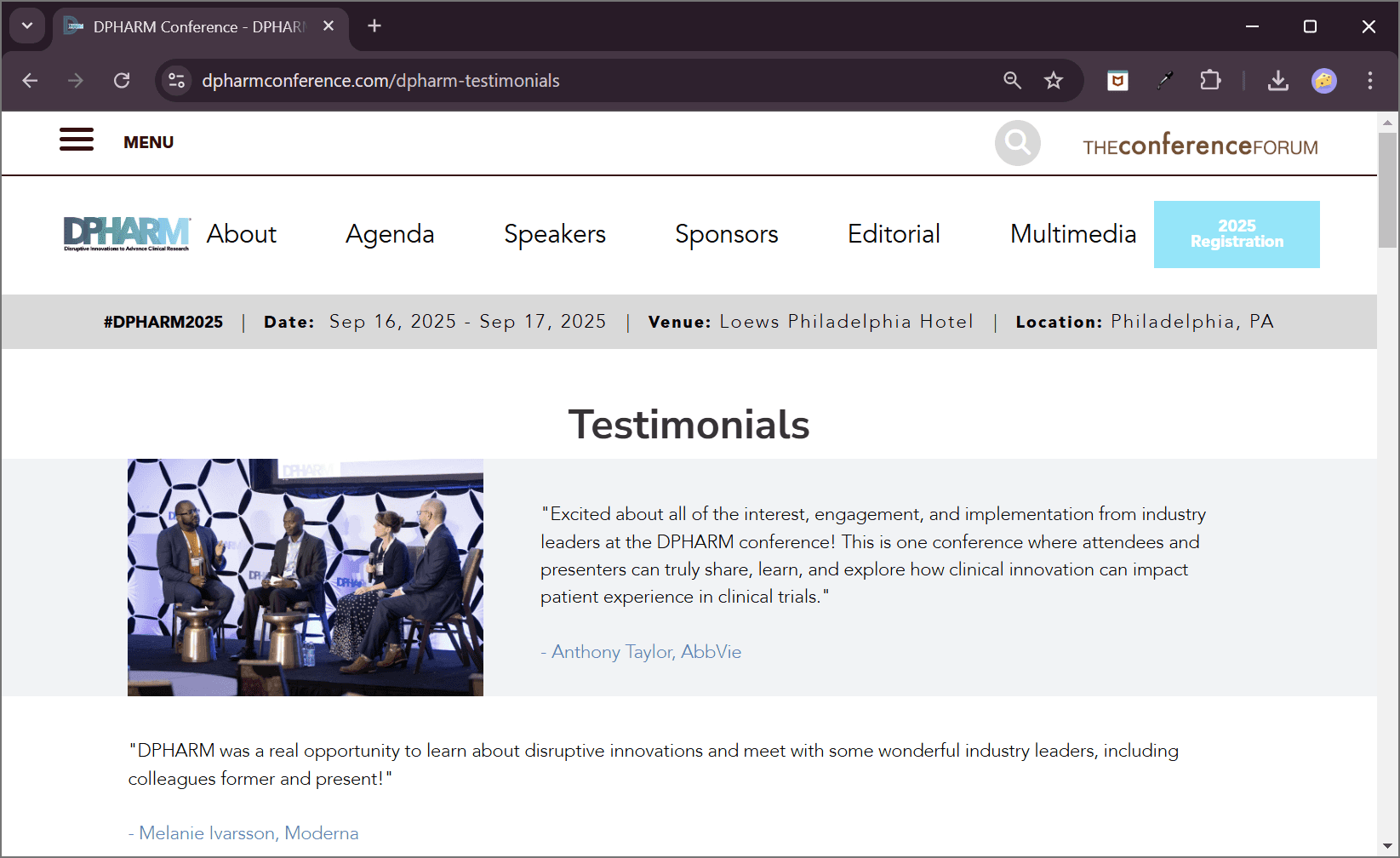
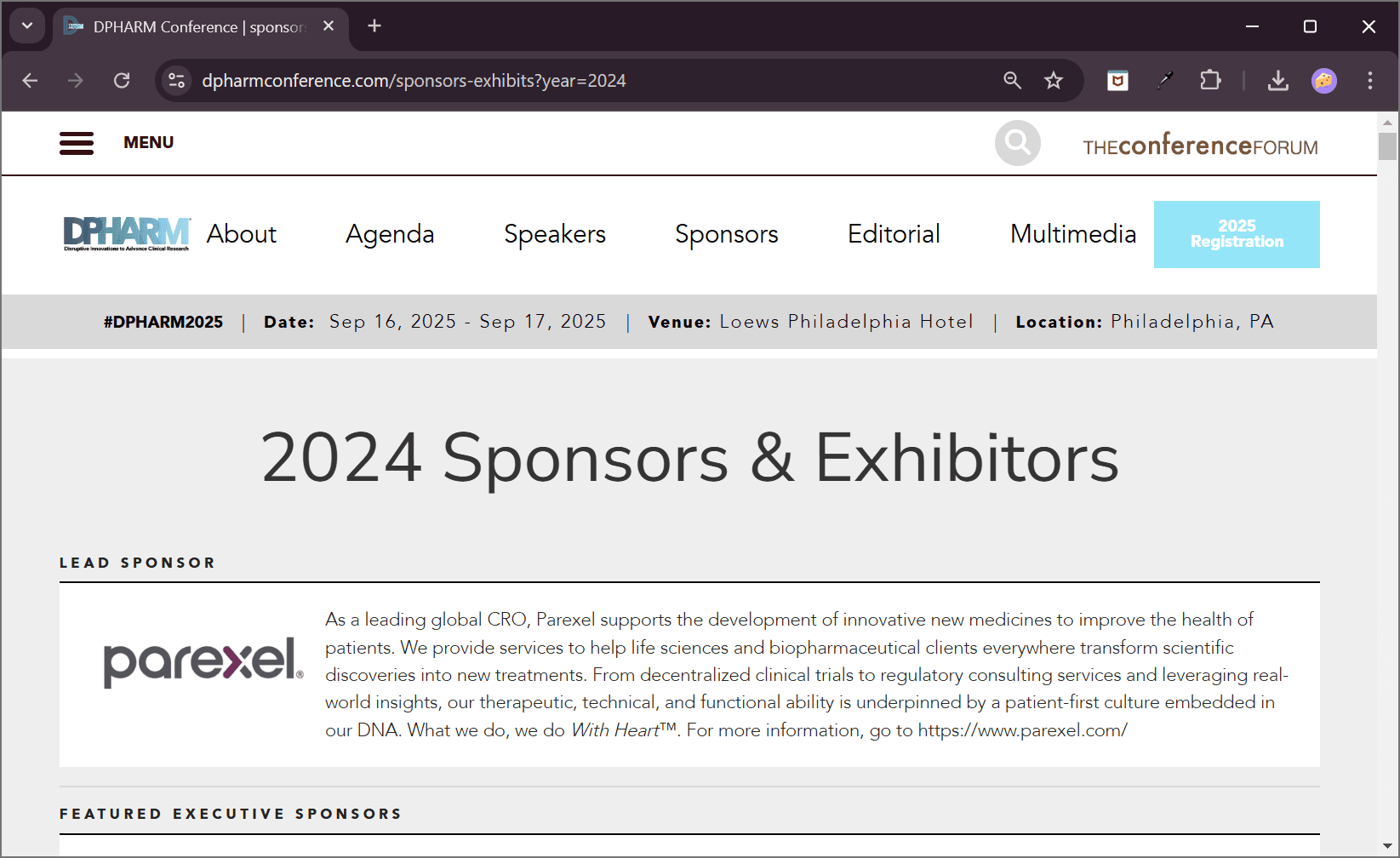
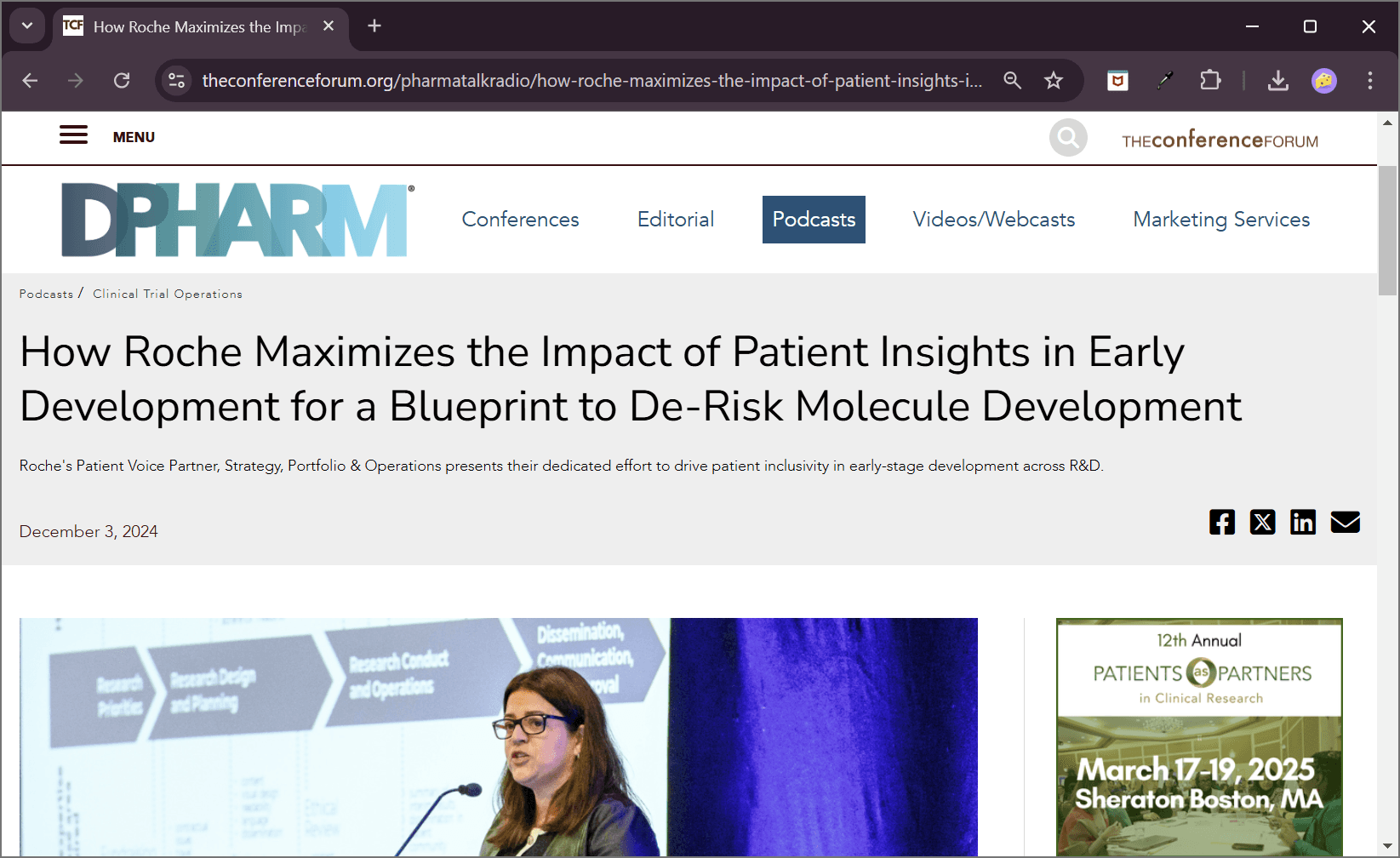
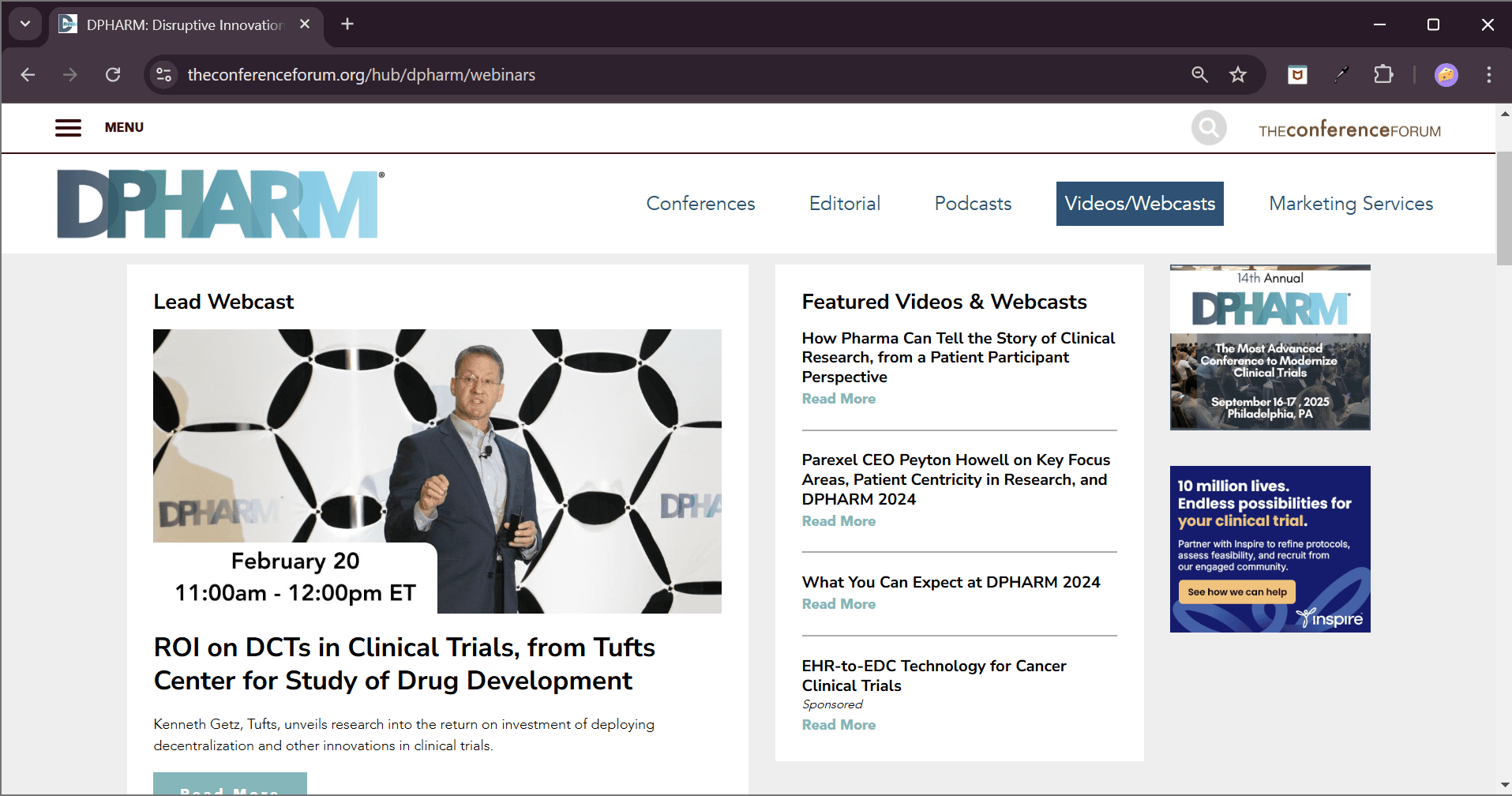
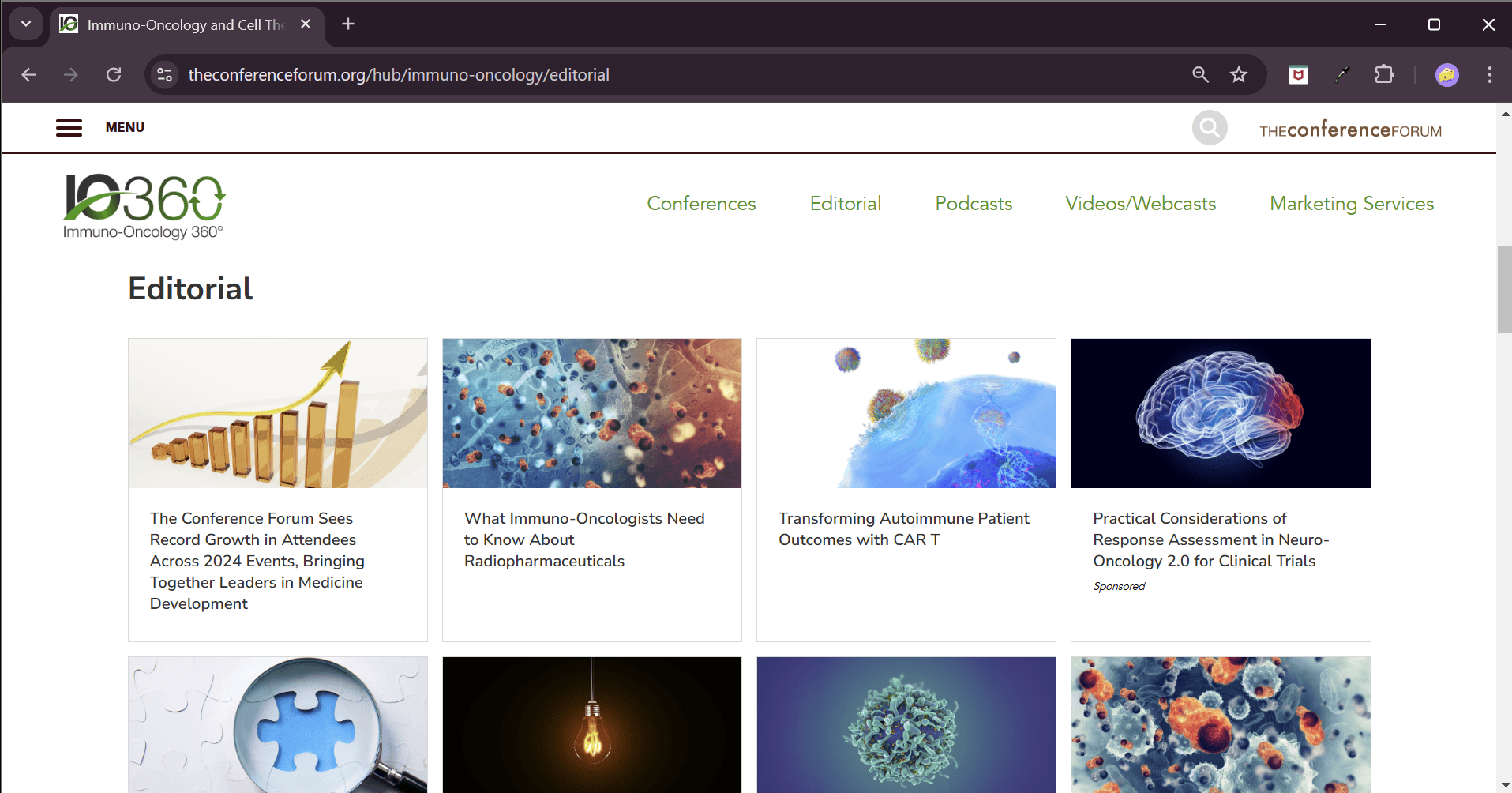
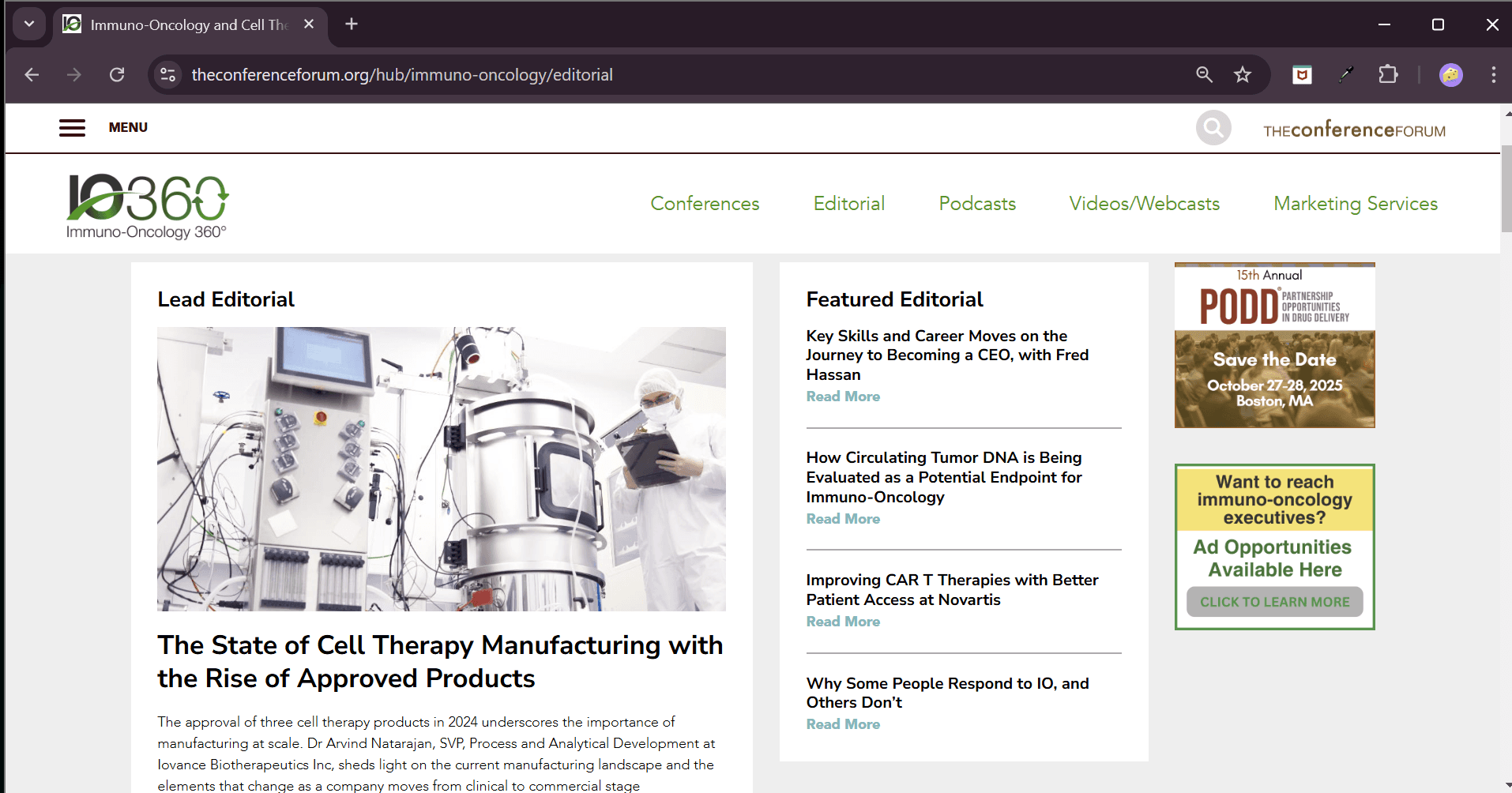
Homepage, conference information pages, agenda, multimedia (editorial, podcasts, webcasts)
Modular design system adaptable across all 9 domains
Mobile-first agenda experience for real-time conference use
Event registration and sign-up flows
Analytics and SEO integration post-launch
4-person Marketing & Design team, collaborating across 9 separate conference sub-teams
Much of the internal design process is confidential. This case study focuses on public-facing design decisions, my contributions, and outcomes.
Four methods. One clear picture.
Before touching a single layout, we ran four research streams in parallel to understand the current site's failures, align stakeholders across nine separate conference teams, and benchmark against the best-performing organisations in the biotech sector.
Assessed content, structure, and performance gaps across the existing platform
Aligned redesign with marketing, design, leadership, and 9 conference sub-teams
Benchmarked against biotech and healthcare sector leaders for design and functionality patterns
Tested wireframes and prototypes with users before development — navigation, registration flow, agenda
Navigation patterns differed across domains — labels, structure, and hierarchy changed from site to site with no shared logic.
→ Users landing on a conference domain couldn't orient to the broader platform. Cross-domain discovery was effectively impossible.
The most important actions — registering for events, finding speakers, accessing the agenda — competed visually with secondary content throughout.
→ Registration conversion was suppressed at every stage of the funnel by unclear visual priority.
The existing site was not responsive. Layouts broke on smaller screens and key interactive elements — including the agenda — were unusable on mobile.
→ Real-time conference attendance increasingly happens on phones. An unusable mobile agenda directly degraded the in-person event experience.
Colour contrast, font sizing, and interactive element sizing fell below accessibility standards across multiple pages.
→ A biotech audience includes clinical researchers and patients — both groups disproportionately affected by poor digital accessibility.
Four decisions that drove engagement and retention.
Every major design decision in this project was made with a specific user behaviour or business metric in mind. These are the four that had the clearest connection between design choice and measurable outcome.
Built a single component library adaptable to each conference domain — shared layout grids, navigation patterns, card structures, and typography scales. Each domain maintains visual identity through colour and imagery, not structure.
Without a shared system, each of 9 teams would diverge independently, raising maintenance cost and degrading cross-domain UX. A unified system directly reduced the overhead of managing 10 sites while improving consistency for returning visitors.
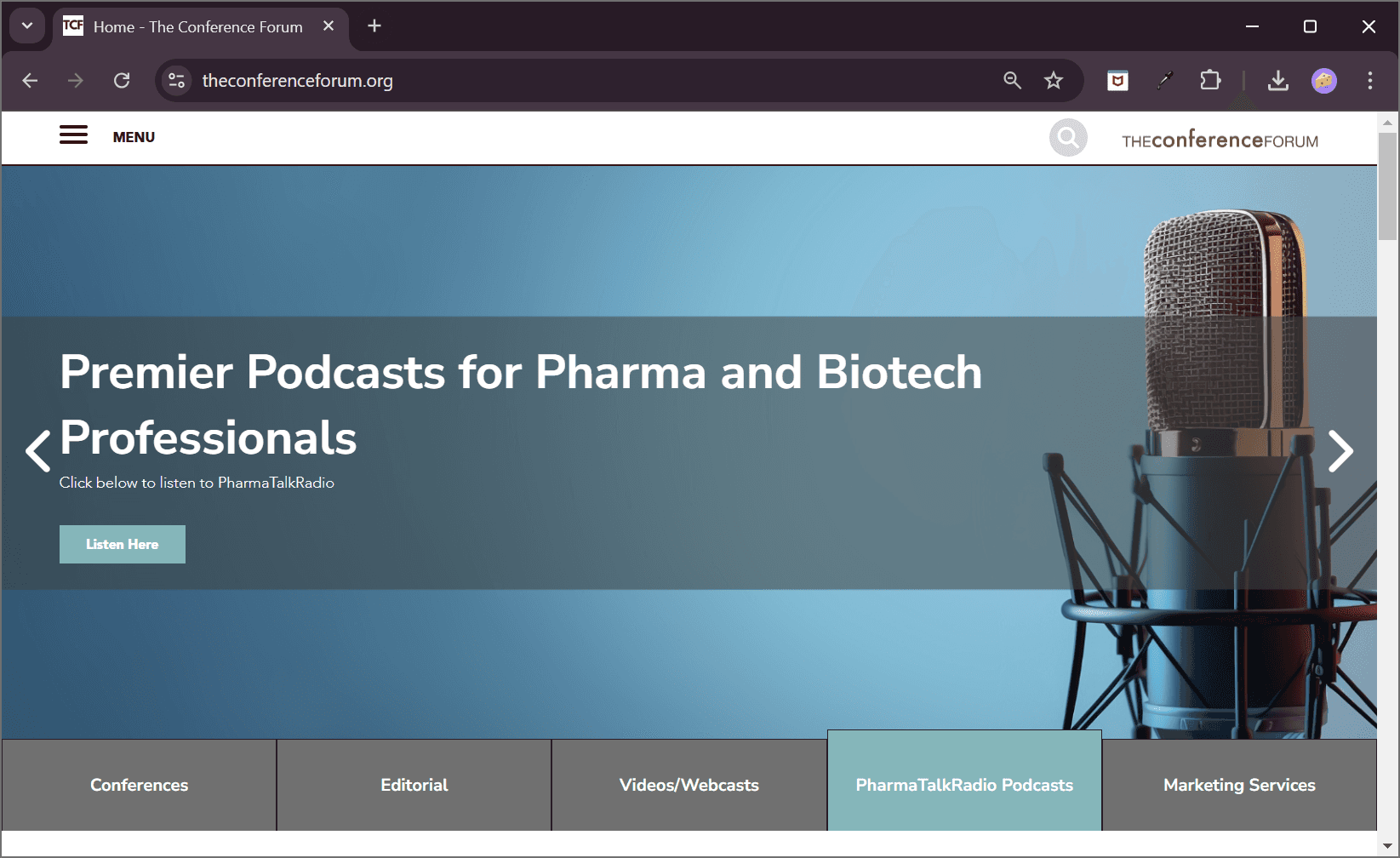
Replaced 9 separate, inconsistent navigation systems with a shared navigation architecture — consistent labelling, structure, and hierarchy across all domains, with clear pathways between the main Conference Forum site and individual conference pages.
Users arriving on a domain site had no way to discover other conferences or return to the main platform. Navigation drop-off was suppressing cross-domain discovery and reducing the lifetime value of each visitor.
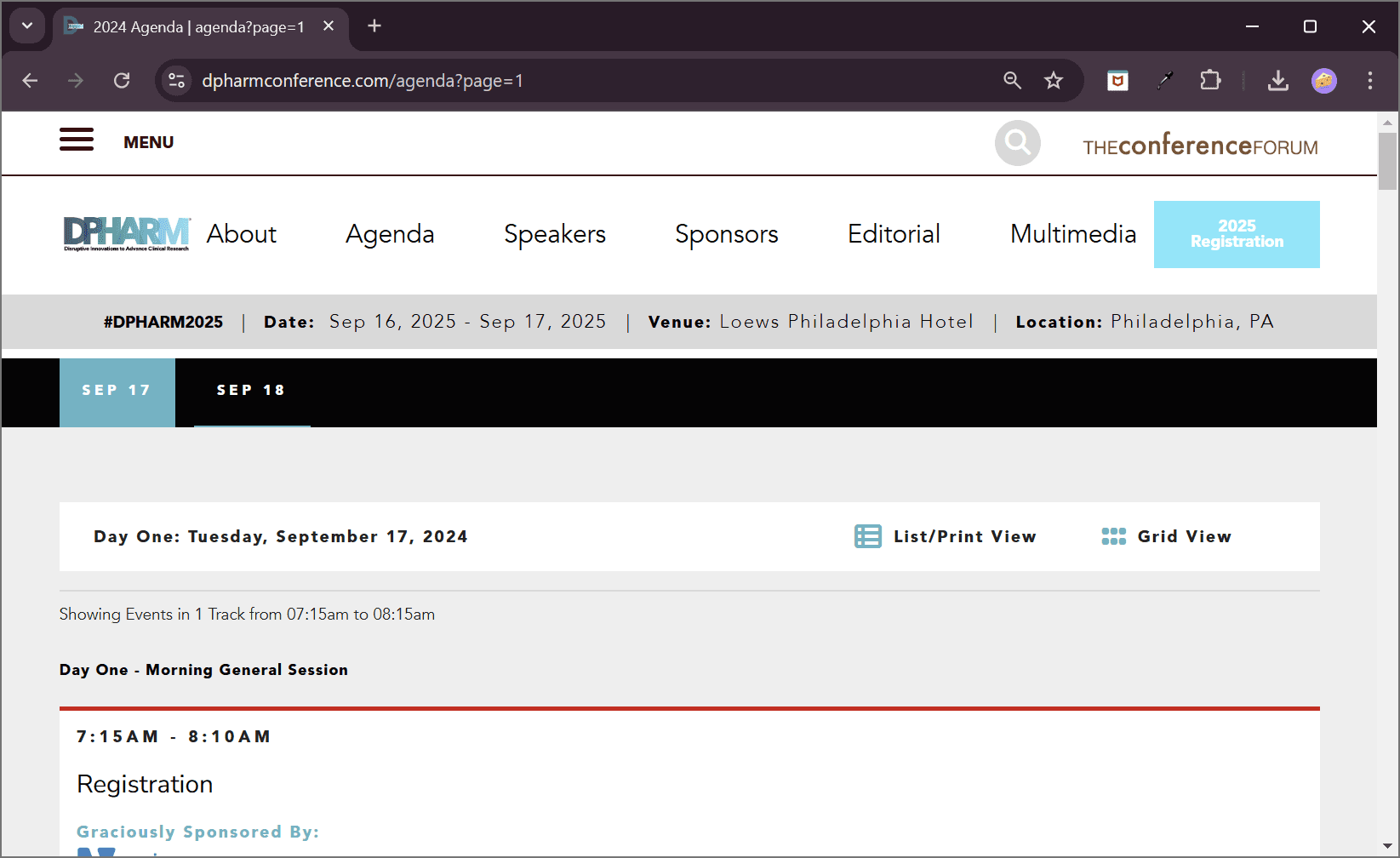
Redesigned the conference agenda for primary mobile use — large tap targets, session cards with expandable detail, real-time track filtering, and colour coding by track linked to room assignments.
Usage data and stakeholder feedback confirmed most attendees access the agenda on their phones during the event. A desktop-first agenda that broke on mobile was directly degrading the in-person conference experience and reducing session attendance.
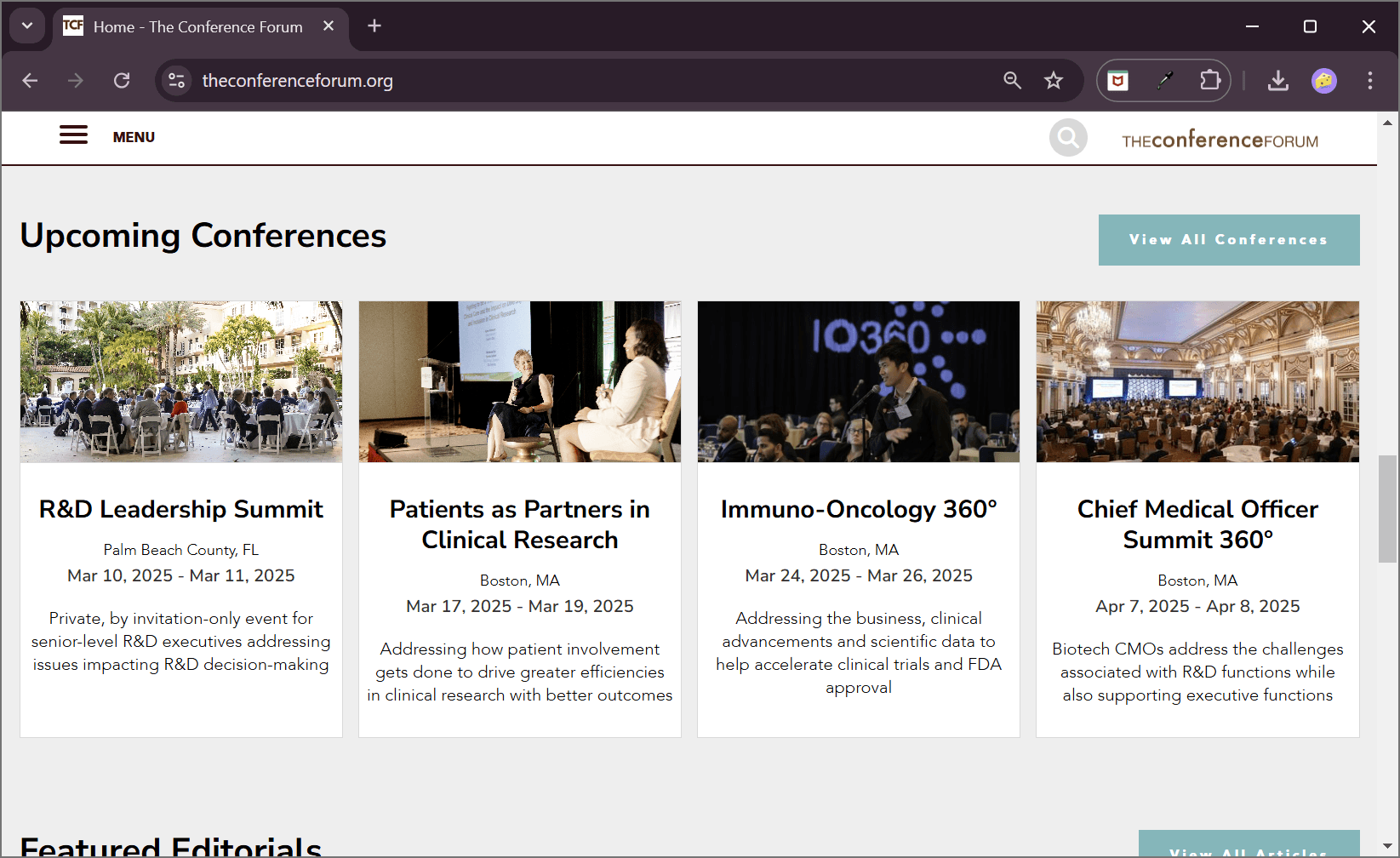
Simplified the registration funnel: reduced steps, clearer CTAs, and consistent placement of 'Register' across all conference pages. Introduced dedicated 'Upcoming Conferences' sections on the homepage and domain pages.
Improving CTA visibility and reducing registration steps is directly correlated with conversion rate. Stakeholders identified event sign-ups as the primary business metric for each domain.
A live platform. Real users. Measurable outcomes.
This is a shipped product — not a concept. The redesigned platform launched across all 10 sites and has been in active use by biotech professionals, conference attendees, and researchers. The outcomes below reflect post-launch improvements observed and reported by the organisation.
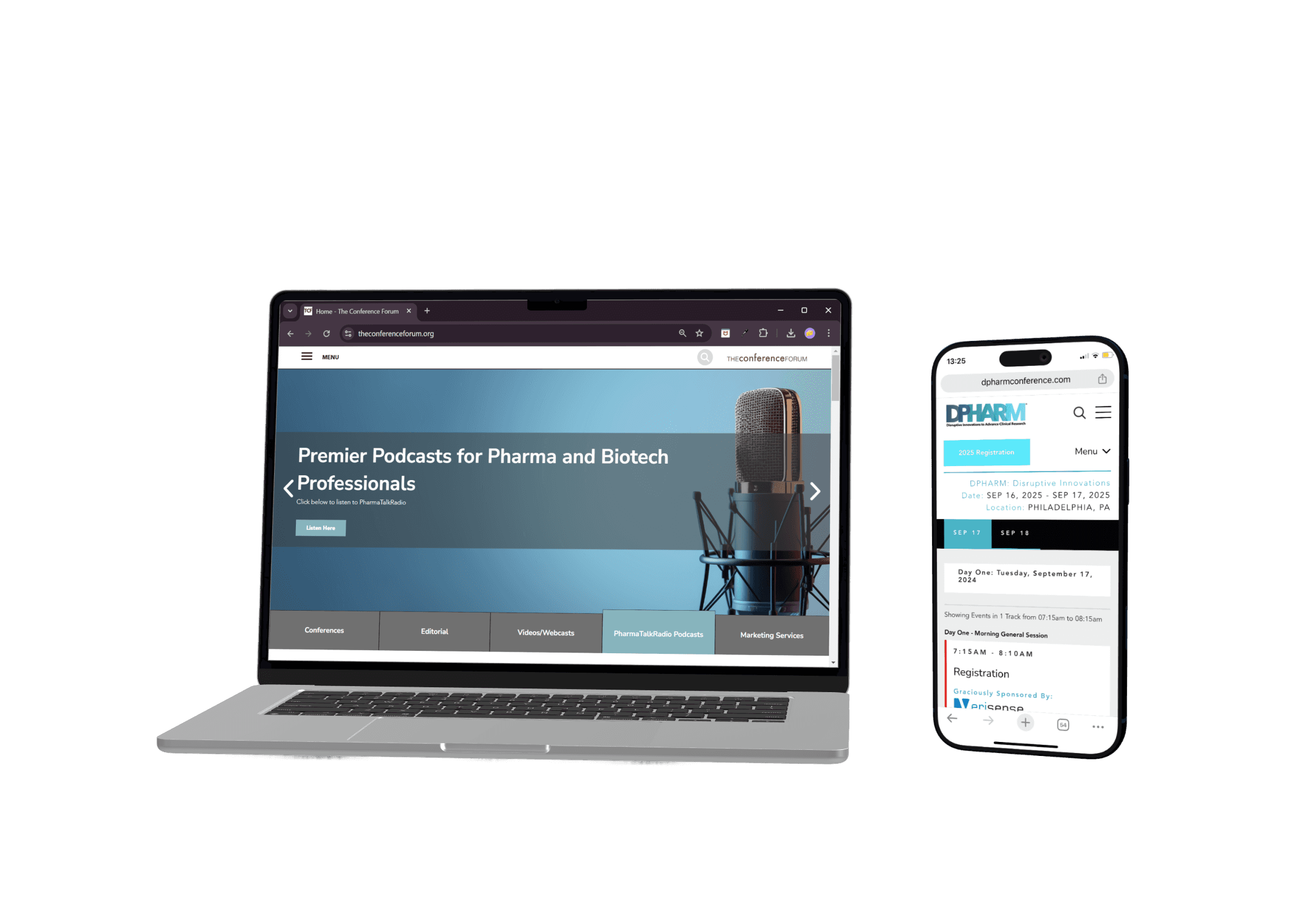
Main Conference Forum site plus 9 individual conference domain sites — all live, all maintained under the new design system.
Simplified registration funnel and improved CTA placement directly increased sign-up rates across all conference domains post-launch.
First fully responsive version of the platform. Mobile session usability — particularly the real-time agenda — dramatically improved.
Unified navigation architecture connected all 10 sites for the first time, enabling users to discover and move between conference domains without leaving the platform.
What this project taught me about design at scale.
Coordinating design decisions across 9 separate conference teams — each with strong opinions, deadlines, and audience needs — required a level of stakeholder management that college projects can't simulate. Every decision had to be defensible to multiple teams simultaneously.
The modular system worked because we involved domain teams early in defining their identity within it — not by presenting a finished system and asking for compliance. Adoption was high because teams felt ownership.
The decision to prioritise the mobile agenda over other features was resisted initially by stakeholders who assumed desktop use. Post-launch, mobile dominated conference-day traffic — validating the call and establishing data as the tiebreaker for future decisions.
The metrics I'd track if I had analytics access.
Primary metric. Measures whether the streamlined CTA placement and reduced registration steps translated to more sign-ups per conference.
Measures whether the mobile-first agenda redesign improved conference-day usage — session views, filter interactions, and time in-app during live events.
Unified navigation and clearer information hierarchy should reduce single-page sessions — more visitors discovering cross-domain content.
Add proper analytics instrumentation to track the metrics above. Introduce A/B testing on registration CTAs — button placement, copy, and timing — across the highest-traffic domains. Expand personalization to surface relevant conferences based on subject area interest.
This portfolio case study page was built using Claude + Framer MCP — an AI-accelerated design-to-production workflow. In the original project, Adobe suite tools were primary; in future phases, prototyping and user testing workflows would benefit from AI-assisted synthesis and pattern recognition across the 9 domain feedback pools.